Program
Thursday 08/02/24
Meeting abstract
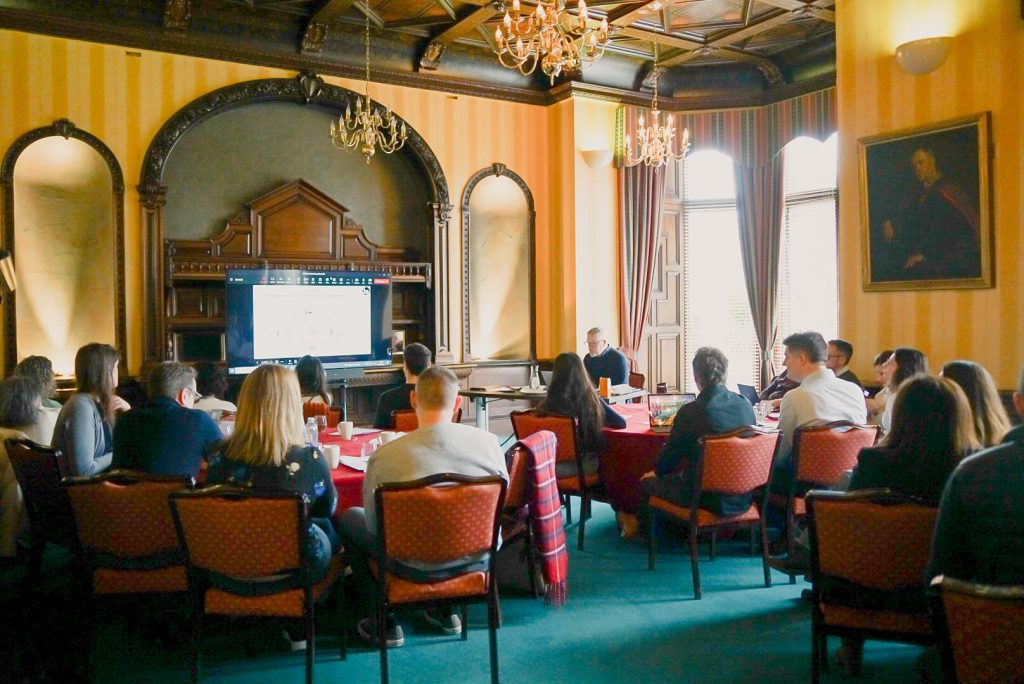
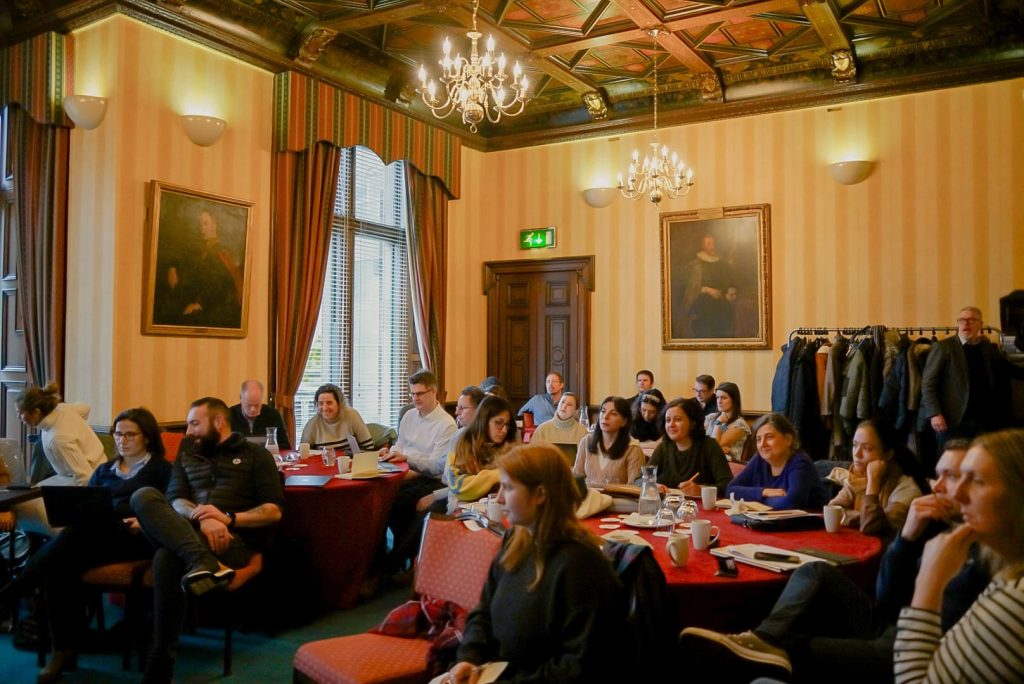
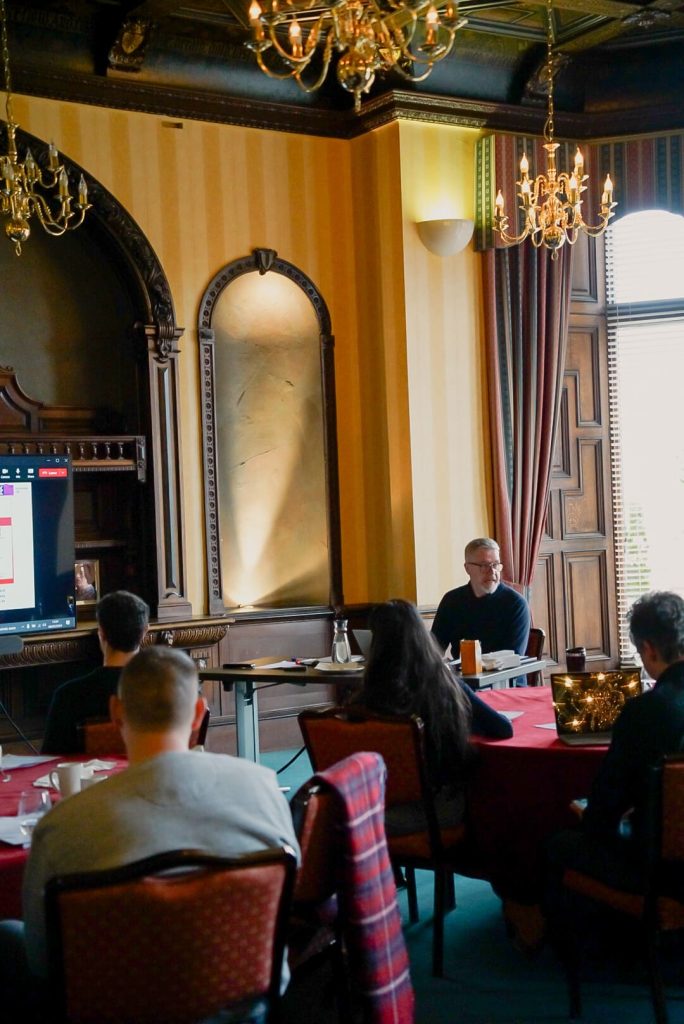
After all assistants arrived at St Leonard´s Hall—Pollok Estate-University of Edinburgh—Leonard Nelsson (UEDIN, UK) started the event by welcoming all our colleagues.
The working package presentations started with a brief introduction & overview of the HaltRONIN Consortium by Prof. Javier Cubero (UCM, Spain). The New news were: the presentation of the Synology platform that will be used for sharing and managing project data, social networks/ project websites and the changes that have occurred in the Consortium. Also, notice was given of the justification that must be carried out in May. The holding of an Annual Meeting in Lisbon with dates scheduled for May, the next EASL congress and the next International Seminar Series on Liver Toxicity and Steatotic Disease were announced.
Then, we started with the second session. Jonathan Fallowfield and Timothy Kendall (UEDIN, UK) presented the problem in the clinical perspectives in NAFLD-NASH. They mentioned the new nomenclature and classification established for NAFLD and what this change implies. Also, they spoke of the future prevalence of the disease increasing considerably. A proposal was presented on how MASLD/NASH should be modelled in laboratories and the need to use multiomics. It was reported that there are several studies in different clinical phases to develop about 50 therapeutic agents. They considered what should be investigated and how big data could help.
Marina Villanueva Paz (University of Málaga, Spain) presented the progress of WP5 inside the project. She discussed the clinical validation of preclinical biomarkers through the implementation of the BIG data-driven approach using large human biobanks of NAFL/NASH patients and the next steps to follow. These advances led to the creation of the database within HaltRONIN’s framework.
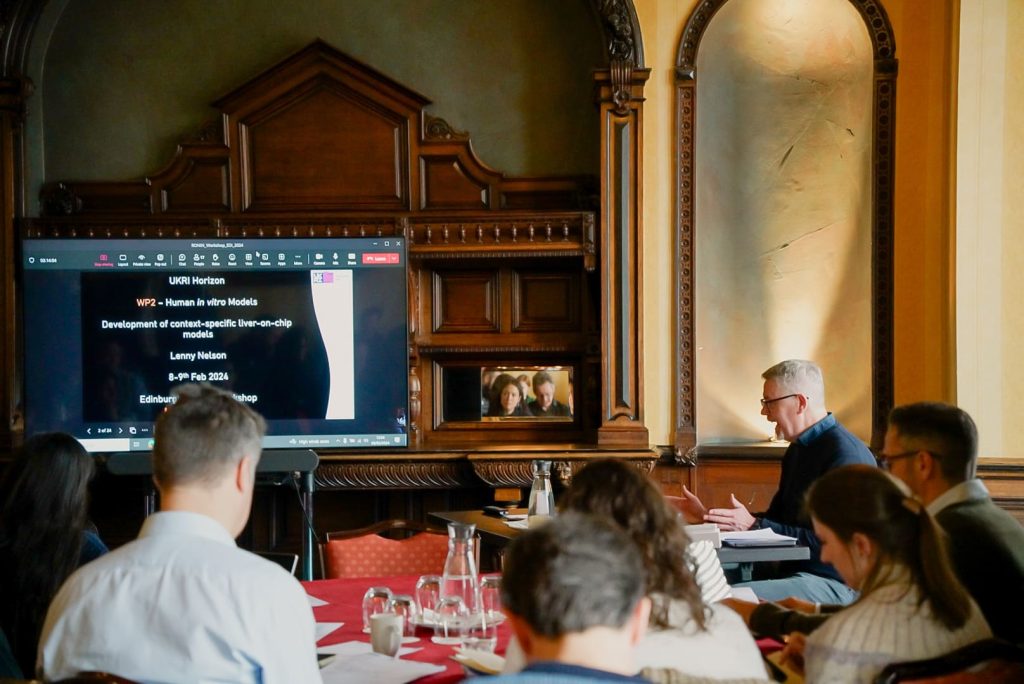
According to the programme, session III began with Leonard Nelson’s (UEDIN, UK) presentation of the development of LiverAce: models-on-a-chip of the human hepatic acinus. In this, he showed the progress of WP2 in each of its tasks marked by the project and the plan to follow.
After this presentation, Shaden Melhem (UEDIN, UK) presented HepaRG Bioenergetics in MASLD. In this, she stood out the importance of the transsulfuration pathway and her interest in the thiosulfate sulfurtransferase in the progression of MASLD.
Pierre Bagnaninchi (UEDIN, UK) presented his job in the Biophysical profiling of the NAFL-NASH transition.
Karima Begriche (INSERM, France) explained the role of fatty acids in cytochrome P450 2E1 (CYP2E1) induction: involvement in fatty liver progression. The aims of her study are: Identify fatty acids able to induce CYP2E1 and determine their effects on lipid metabolism, and determine whether fatty acids inducing CYP2E1 could increase APAP cytotoxicity and alter mitochondrial function. For this project, she works with the HML organoid model to see CYP2E1 expression and activity, steatosis, inflammation and fibrosis, and APAP cytotoxicity.
Later, Anabel Martínez Lyons (UEDIN, UK) talked about Cholangiocyte Pathobiology. She also explained how the establishment of an inflammatory niche drives early biliary carcinogenesis: the questions that her equip tries to answer are: Notch signalling is essential for biliary development & repair – could the same be true for biliary cancer? What factors drive the malignant transformation of the biliary epithelium? To answer these questions, she has the following aims: determine what factors/conditions are needed to drive iCCA initiation and early growth; characterise the molecular landscape at the interface between pre-malignancy and cancer; and answer how ducts grow in response to long-term injury in iCCA.
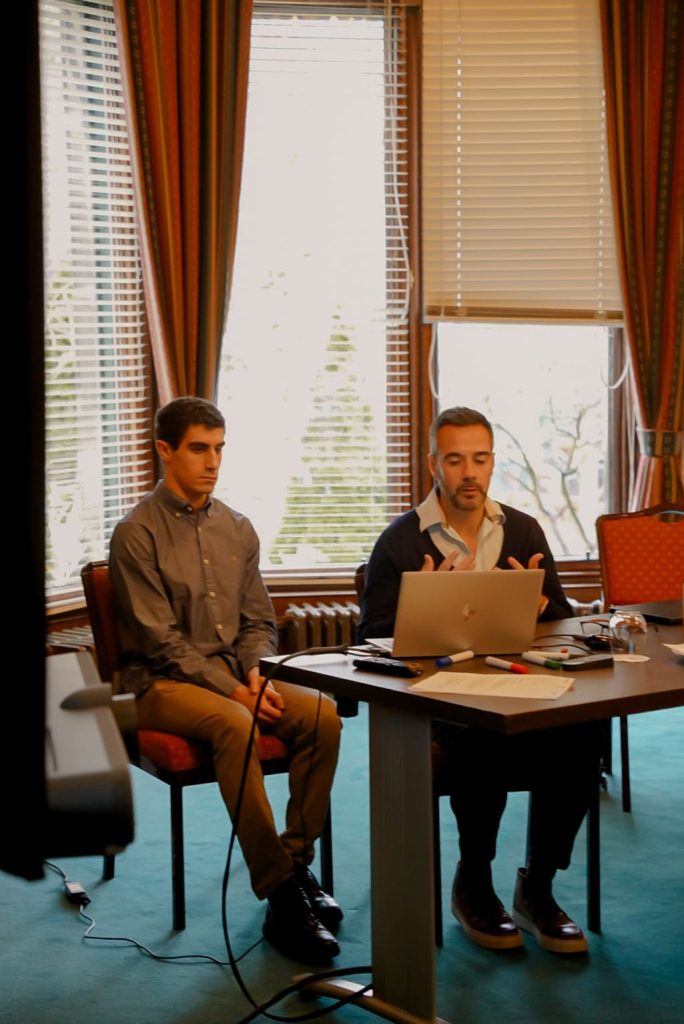
Pau Sancho (FCRB-CERCA, Spain) and Joana P G Miranda (FFUL, Spain) finalized the session and the date with their presentation: iPSC-derived 3D Human Liver System for NAFLD-NASH. Pau Sancho started talking about modelling health-disease transitions in human in vitro models. They made an overview of iPSCs and the work of these iPSCs in WP2 tasks. Both spoke about the tasks that have already been done. She has differentiated iPSCs into hepatic cells, stellate cells and macrophages, and the SOPs developed for induction of NAFL-NASH transition and optimization of the conditions to induce NAFLD/MASLD were done. In conclusion, the WP2 has accomplished a successful adaptation of HLCs to lower concentrations of glucose, insulin and dexamethasone, and exposing HLCs to fatty acids in a ratio of 2 oleic acid: 1 palmitic acid allows the recapitulation of IR and NAFLD progression.
On the second day, we started with an update of the humanized zebrafish, which was realized by Gulçin Cakan (IBG, Turkey) and Ozlen Konu (BILKENT, Turkey). They talked about using zebrafish to modelate the NASH disease in humans. They spoke of the mixed species RNA-sequencing performed (at the whole exome level, and CNV and SNvs were identified) on fish xenografted with HepaRGs. They have developed a transcriptomics pipeline: CAP-RNASeq and eSigNASH. Also, they showed examples of high-fat diet and weight loss paradigms in zebrafish models.
Then, Francisco Javier Cubero and Héctor Leal (UCM, Spain) described the DUAL animal model in different organisms and gave some clues on proper animal experimentation with these in vivo models, as well as transposing clinical models to both murine and zebrafish DUAL models. Afterwards, Héctor continued discussing the mechanistic pathways, e.g. ER stress mitochondria-ROS axis exomes. He made the following abstract about his presentation: EVs can be isolated by ultracentrifugation and analyzed by NTA, WB and TEM; isolated EVs are homogeneous in size and express all CD63, Alix and CD81 exosome-specific markers, EVs from C57BL/6J control mice have both endogenous and bacterial origin, and control EVs lethal for HepG2 cells at high concentration. He finished the presentation by talking about the next steps in his study.
José Carlos Fernández-Checa (CSIC, Spain) continued with his presentation, “Mice with humanized liver to model human MASLD”. The Conclusions of this presentation were: Xenotransplantation of human hepatocytes (HH) in the triple knockout FRGN mice results in a robust humanization rate of up to 80% of liver repopulation with HH; humanized FRGN mice: are more susceptible to diet-induced NASH than WT mice, exhibiting increased steatosis, fibrosis and inflammation and exhibit increased mitochondrial cholesterol accumulation and subsequent oxidative stress, also overexpressing StARD1 display impaired mitochondrial routine performance with lower basal respiration and ATP production as well as decreased maximal respiration; the development of NASH in humanized FRGN mice further increases following StARD1 overexpression, exhibiting hepatocyte ballooning and the presence of Mallory-denk bodies; and StARD1 overexpression potentiates CDAHFD diet-induced chenodeoxycholic acid generation in the primary bile acid generated in the mitochondrial alternative pathway.
The meeting continued with Félix Royo and Juan Manuel Falcón (CICbioGUNE, Spain) ‘s presentation about 3D Models and extracellular Vesicles SOP. This will explain the need for 3D models of liver hepatocytes, indications for the approach to EV purifications, and recommendations for EV studies.
Session III of the second day started with the presentation SteatoSITE-Clinical validation by Jonathan Fallowfield and Tim Kendall (UEDIN, UK). They talked about the SteatoSITE Consortium and how it is constructed. The conclusions were: a merged dataset from multiple data providers across Scotland has been created; SteatoSITE is a unique resource to support translational studies in MASLD; Initial exploitation has focused on the application of AI/ML methods, including developing deep-learning algorithms to predict the risk of clinical outcomes from EHR data and using stain-free imaging of clinically annotated biopsies to create new tissue.
Judith Farrés (AX, Spain) finished the presentations with her presentation “Data Integration” which gave some recommendations for the application of Anaxomics’ systems biology tools in biomarker discovery and machine learning in network-based modeling. She exposed a project use case and discussed the clinical outcomes to model.
The meeting finished with session IV, which covered KPIs, milestones, deliverables, and discussion. The core group had a round table and brainstorming to discuss who, what, where, when, and how to advance the project.