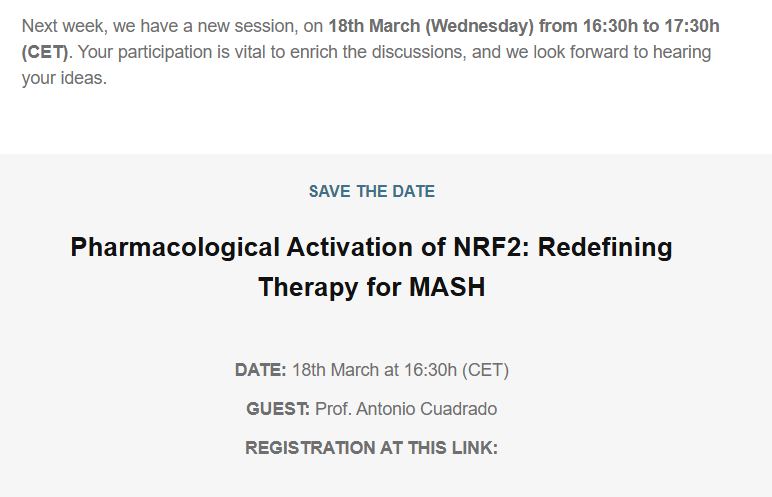
Metabolic Dysfunction-Associated Steatohepatitis (MASH) is a progressive liver disease characterized by lipid accumulation, chronic low-grade inflammation, hepatocyte death, and fibrosis. It affects hundreds of millions of individuals worldwide and causes approximately two million deaths per year. Despite its prevalence and severity, therapeutic options remain extremely limited, highlighting the urgent need for new pharmacological strategies that can address the multifactorial nature of MASH while remaining suitable for chronic use. Given that MASH behaves as a metabolic and inflammatory syndrome rather than a single-pathway disease, approaches capable of simultaneously modulating lipid metabolism, oxidative stress, and inflammation are particularly attractive. The presentation proposes the transcription factor NRF2 as a novel therapeutic target, based on strong associations between NRF2-regulated gene networks controlling inflammation, redox homeostasis, and metabolic reprogramming in both human MASH samples and preclinical models. The methodology combines transcriptomic, lipidomic, and functional analyses across several murine MASH models, as well as cell culture studies using hepatocytes and non-parenchymal liver cells. A small molecule, PHAR, was developed to mildly activate NRF2 by interfering with β-TrCP–mediated NRF2 degradation without inducing excessive pathway activation. PHAR reduced disease progression, improved lipid metabolism, decreased oxidative stress and inflammation, and attenuated fibrotic gene expression. Importantly, only a modest increase in NRF2 activity was required to achieve these effects. Also, the data support the development of NRF2-based biomarkers as a companion diagnostic strategy. Such biomarkers could enable patient stratification based on baseline NRF2 pathway activity, facilitate monitoring of disease progression, and provide pharmacodynamic readouts of drug response and target engagement. An NRF2-centered biomarker panel may therefore improve clinical trial design and support precision medicine approaches in MASH. In summary, these data support the concept that soft, controlled NRF2 activation, together with NRF2-based companion diagnostics, may enable a safe, effective, and disease-modifying approach for the long-term treatment of MASH. |